We are now operating out of cleveland, ohio again; toledo followers stay in touch!! it was nice meeting you all!!
If you are using a mobile browser, please ensure you change your settings to display the desktop site for the time being!!

Access Denied 2.0
Ohio’s sudden bans on kratom alkaloids and hemp-derived cannabinoids have triggered a familiar crisis: people forced into withdrawal, scrambling for treatment, and searching for relief wherever they can find it. This article examines what happens when access disappears overnight — and why we were warned this would happen.
12/15/20254 min read
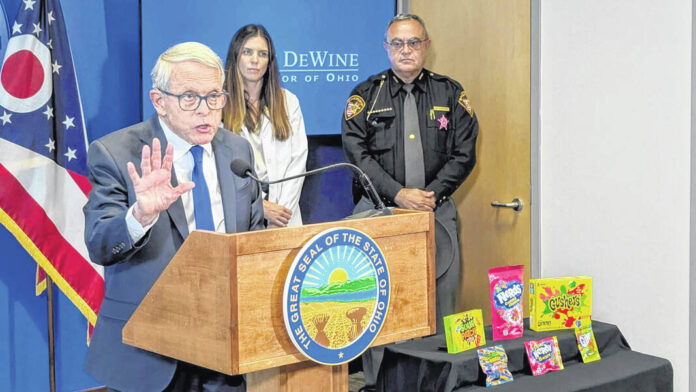
When policymakers talk about protecting public health, they rarely acknowledge the predictable harm caused when access is removed without warning, transition plans, or alternatives. Ohio’s recent legislative actions — particularly the immediate ban on several novel kratom alkaloids — once again demonstrate how access-focused failures repeat themselves across very different substances.
Kratom-derived compounds and cannabis products are not the same pharmacologically, culturally, or medically. But the policy pattern surrounding them has become strikingly familiar.
An Immediate Ban, an Immediate Crisis
Before the ink was even dry, Ohioans woke up to find that 7-hydroxymitragynine (7-OH), mitragynine pseudoindoxyl, and mitragynine-glyoxylate (MGM) were suddenly illegal. No grace period. No sell-through window. No warning to consumers who had incorporated these compounds into their routines for pain management, opioid substitution, or functional stability.
The result was not prevention. It was panic.
Unlike many drug policy changes that include delayed enforcement or phased implementation, Ohio’s ban on these specific kratom alkaloids took effect immediately. Overnight, products disappeared and vendors stopped shipping to the state. For many users, this meant abrupt withdrawal — not from kratom as a whole, but from concentrated or modified alkaloids that had been providing consistent effects.
Reddit, Withdrawal, and Real-Time Fallout
On Reddit — particularly within Ohio-focused kratom and harm-reduction communities — posts began appearing within hours. Users described relying on 7-OH or pseudoindoxyl-mitragynine after tapering off prescription opioids or deliberately avoiding a return to methadone or buprenorphine. Others used these compounds for chronic pain conditions that had never been adequately addressed through conventional medical care.
This was not casual use being interrupted. It was functional dependence being severed without warning.
What Was Warned About Is Now Happening
In my earlier Rise Above the Risk article examining kratom bans and reduced access to Suboxone, I warned that removing alternative supports without expanding treatment access would not reduce harm — it would force people into crisis decisions.
That warning is now materializing.
Ohio-based Reddit users are openly discussing how to urgently get onto Suboxone, often without time to find providers, stabilize dosing, or ensure continuity of care. Others are discussing illicit opioids — not out of preference, but as a last-resort strategy to avoid severe withdrawal and maintain basic functioning.
This outcome was never about kratom being interchangeable with opioids. It was about policy-induced scarcity.
SB 56 and a Separate — but Familiar — Access Problem in Cannabis
While Ohioans were still grappling with the kratom alkaloid ban, Senate Bill 56 moved forward to restrict hemp-derived intoxicating cannabinoids such as Delta-8 THC, HHC, and THCA. These products are pharmacologically and legally distinct from kratom, but they served an important access role for a different population.
For years, hemp-derived cannabinoids functioned as an affordable, legally accessible option for people who either lived in states with limited medical marijuana programs or could not afford dispensary pricing. SB 56 accelerates their removal from the market, forcing consumers into the licensed system overnight.
At the federal level, legislation tied to reopening the U.S. government redefined hemp in a way that renders semi-synthetic cannabinoids effectively illegal nationwide, eliminating this access pathway entirely.
Why Cross-Border Enforcement Matters More Now Than Ever
Ohio’s prohibition on bringing cannabis back from other states takes on new significance in this moment.
With hemp-derived products disappearing, many consumers will be actively seeking the most affordable remaining legal option. Michigan’s mature cannabis market — with lower prices and broader availability — has long filled that role.
By closing off this pathway at the same moment lower-cost hemp options are eliminated, Ohio is closing multiple access routes at once. This is not about encouraging cannabis use; it is about constraining affordability at a time when consumers are already destabilized.
A Niche Conversation: SR-17018 and the Search for a Way Out
As access collapses, a small but growing subset of users is discussing something very different: SR-17018.
SR-17018 is a synthetic opioid receptor ligand developed in academic research settings, notable for its atypical signaling profile. Unlike traditional opioids, it is a G-protein–biased agonist at the mu-opioid receptor, meaning it activates analgesic pathways while minimizing beta-arrestin recruitment — a mechanism associated with tolerance, respiratory depression, and withdrawal.
Among harm-reduction–focused users, SR-17018 has gained attention for a striking claim: that it may reduce or even reverse opioid tolerance and substantially blunt withdrawal symptoms when used carefully. These discussions remain niche, experimental, and largely theoretical — but they underscore something important.
What SR-17018 Represents — Not a Solution, but a Signal
SR-17018 is not approved for human use, not legally available as a medication, and not something that should be approached casually. It exists primarily in preclinical literature and informal discussion spaces.
But its emergence in conversation matters. It reflects a population actively searching for off-ramps — not highs, not escalation, but ways to stabilize, reset tolerance, and avoid deeper entrenchment in opioid dependence.
A separate, dedicated article will be published examining SR-17018 in detail — its pharmacology, what the science actually shows, and why people are talking about it now. For the purposes of this piece, its relevance is simpler: when people begin looking to unregulated research chemicals for relief, it is a sign that the system has failed to provide safer, sanctioned alternatives.
Access Denied Is Still Not Harm Reduction
Ohio’s immediate ban on novel mitragynines and its concurrent restriction of hemp-derived cannabinoids are not examples of thoughtful public health policy. They are examples of access denial without contingency planning.
The substances are different. The people who use them are different. But the policy failure is the same: abrupt restriction without replacement creates instability, desperation, and risk.
If lawmakers want to meaningfully reduce harm, they must recognize that access is not a loophole — it is a public-health variable. Because when access disappears overnight, people do not stop needing relief. They simply begin looking for it in ways never before imagined. “Desperate times call for desperate measures”, as it is said.